
01 Reduce
The cheapest e-waste is the kind that never gets created. We advise clients on extending the life of hardware they already own — RAM and SSD upgrades, battery and screen replacements, and repairs that defer a full fleet refresh by years.
The order matters. Shredding a working laptop is a failure, not a result. We work down the hierarchy and only recycle what genuinely can't be kept in service.
The cheapest e-waste is the kind that never gets created. We advise clients on extending the life of hardware they already own — RAM and SSD upgrades, battery and screen replacements, and repairs that defer a full fleet refresh by years.
Anything that can be saved is saved. Machines are repaired, tested, cleaned and graded, then resold as refurbished stock. Reusing one machine avoids the entire manufacturing footprint of replacing it — by far the biggest environmental win available.
What's genuinely dead is dismantled by hand into clean material streams — ferrous and non-ferrous metals, plastics, circuit boards, cabling and batteries — and passed to licensed downstream processors for recovery.
You get a report at the end covering what was collected, what was destroyed, what was reused and what was recovered — the paperwork your compliance and sustainability teams will ask for.
Every item is booked in and recorded by type, make, model and serial number, creating the chain of custody for the whole job.
Drives are removed and either wiped to a recognised erasure standard or physically destroyed. Certificates are issued against the asset list.
Hardware is bench-tested to decide its path: repair and refurbish, harvest for spare parts, or break down for material recovery.
Repairable units are fixed, cleaned, reinstalled and graded, then listed for resale locally or supplied to trade and export buyers.
The remainder is separated into metals, plastics, boards, cabling and batteries, then sent to licensed processors. Nothing goes to landfill.
You receive the asset report, destruction certificates and diversion figures for your own environmental reporting.
A single desktop contains recoverable copper, aluminium, steel, gold and rare earths — alongside substances that should never reach a landfill. Handling it correctly is not optional.
Metals and plastics are separated and returned to manufacturing supply chains instead of leaching into soil and groundwater.
Batteries, mercury-containing backlights and other hazardous components are isolated and routed to specialist handlers.
You can show where your retired assets went and what happened to them — with paperwork, not assurances.
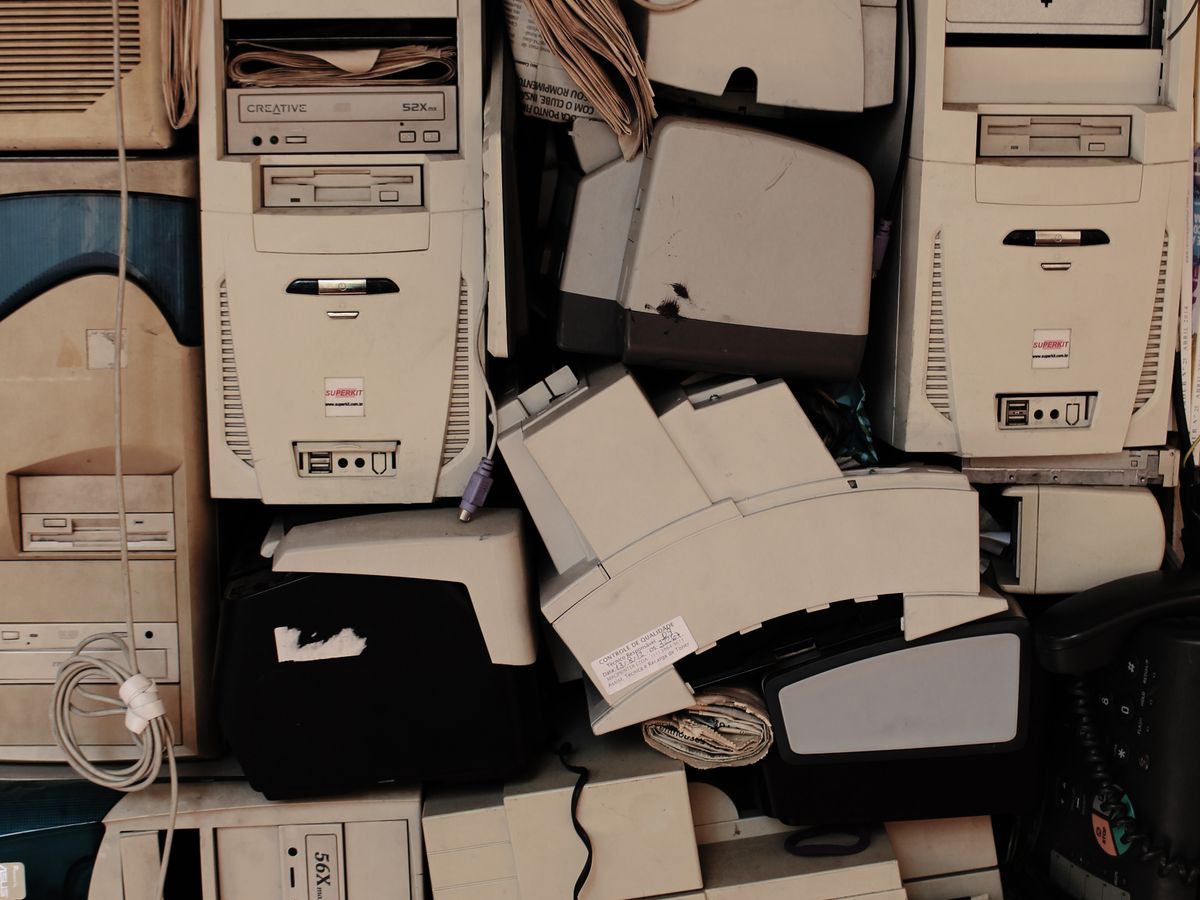
Everything that comes through our door leaves as either a working machine, a usable part, or a recovered material stream. That's the whole model.
Tell us roughly what you have and where it is. We'll come back with a collection window and a quote — and if there's resale value in it, you'll see that too.